Rev Share 101: Where Is The Money Coming From?


October 22, 2026 As we get ready to tip off another college basketball season, I figured it would be a good time for a quick refresher on one of the biggest ongoing changes in college sports: revenue sharing.
I'm sure you've heard all the terms and buzzwords by now... NIL, revenue sharing, the House settlement, salary caps, roster budgets, collectives, and about a hundred others that seem to get thrown around and used interchangeably, often incorrectly. But what do all of these terms actually mean?
Who's paying these athletes? How much can schools spend? And if there's a cap, how are some college basketball teams reportedly spending more than $20 million on their rosters?
Let's break it down.
First, What Is Revenue Sharing? Revenue sharing, or "rev share," is pretty much exactly what it sounds like.
Universities are now allowed to share a portion of their athletic revenue directly with student-athletes.
For decades, college athletes helped generate billions of dollars for universities, conferences, television networks, and the NCAA, but schools generally weren't allowed to compensate athletes directly for participating in sports. But that all changed on July 1, 2025.
Under the new system, participating universities can enter into agreements with their athletes and compensate them directly. Instead of athletes relying exclusively on outside businesses, donors, or collectives for NIL opportunities, the university itself can now be responsible for making payments.
That's revenue sharing.
So, What Is the House v. NCAA Settlement? Without getting too deep into the legal weeds, the House v. NCAA case was a major antitrust lawsuit challenging the NCAA's restrictions on athlete compensation. In June 2025, a federal judge approved a multibillion-dollar settlement that fundamentally changed the business of college athletics.
There were several important pieces to the settlement, including billions of dollars in back damages for former athletes, new roster limits, and a system allowing universities to compensate athletes directly. For the purpose of this article, we're going to focus on that last part.
The settlement established the framework for institutional revenue sharing, including an annual cap on these new payments and benefits participating schools can provide to athletes.
How Much Money Can Schools Spend? When revenue sharing officially began in the 2025–26 academic year, the initial cap was approximately:
$20.5 million per school.
That cap is expected to increase over time because it is tied to a formula based on a percentage of certain Power conference athletic revenues. For the current 2026–27 academic year, that number increased to approximately:
$21.58 million per school.
But there's one very important distinction here.
That $21.58 million applies to the entire athletic department. Not just men's basketball.

Football, men's basketball, women's basketball, and other sports all fall under the same institutional cap. Technically, it's an institutional benefits cap, but for the purpose of this refresher, we're focusing mainly on direct athlete compensation.
Schools determine how to allocate those resources across their athletic programs. A major football school might dedicate a substantial portion of its budget to football, while a basketball-focused university could direct a much larger percentage to basketball.
And just because a school is allowed to spend $21.58 million doesn't mean it has to. That's just the maximum under the current framework, not a requirement.
How Do Athletes Actually Get Paid? This is where things can get a little confusing.
People often use NIL and revenue sharing interchangeably, but they're not the same thing.

1] Revenue Sharing = Money paid directly by the university
This is money paid directly by the university to the athlete under an institutional agreement. These payments count toward the school's annual revenue-sharing cap. Depending on the contract, the athlete might receive monthly payments, semester payments, or another negotiated payment schedule.
2] Third-Party NIL = Money paid by outside businesses or organizations
This money can be part of the overall compensation package discussed or facilitated by a university.
For example, a school might work with an outside business, collective, or multimedia rights partner (MMR) to help arrange additional NIL compensation for an athlete. While the opportunity may be connected to the university, the athlete's agreement and payments are with a separate third-party entity. Qualifying third-party NIL payments generally do not count toward the school's revenue-sharing cap.
But third-party NIL doesn't necessarily have to involve the school at all. Athletes can also secure their own independent endorsement deals, sponsorships, appearances, and social media partnerships. Think of this as the more traditional influencer marketing side of NIL, where companies pay athletes for their brand, audience, influence, or marketability. These agreements may be subject to reporting requirements and compliance rules, but they are separate from direct institutional payments.
Of course, that doesn't mean third-party NIL payments are a free-for-all. These agreements still have to comply with applicable rules, including reporting requirements and, [in most cases], demonstrating a legitimate business purpose and reasonable compensation. Just because the money is coming from an outside organization doesn't automatically mean it's permissible.
And that's why understanding who's actually paying the athlete, and what each contract requires, is so important.
What Happens If a Basketball Team Wants to Spend More? Now we're getting to the interesting part. Let's say a university decides to allocate $5 million of its revenue-sharing budget to men's basketball. Does that mean the team can only spend $5 million on its roster? Not necessarily.
As mentioned above, universities may also help facilitate additional compensation through qualifying third-party NIL agreements. These outside payments generally don't count toward the school's revenue-sharing cap, meaning a team's total roster compensation could be significantly higher than its institutional allocation.
Of course, there's no guarantee of how much additional money athletes on a particular team will receive through these arrangements. It depends on available opportunities, outside partners, and whether the agreements comply with applicable NIL rules.
But the key takeaway is that the institutional revenue-sharing cap and the total value of a team's player compensation are two different numbers.
So, How Much Are Teams Actually Spending? Now this is where things get pretty wild. Before we get into the numbers, I'd encourage everyone to take what they read on Twitter, social media, and the internet with a giant grain of salt. Especially when it comes to how much college athletes are supposedly making.
Some of these figures come from algorithms that estimate an athlete's marketing value or social media influence. Others come from someone who heard something from someone, who probably heard it from someone else. LOL.
And let's not forget, there are people on all sides of this business, whether it's coaches, agents, athletes, or others involved, who might occasionally embellish a number or two.
At the end of the day, the only people who truly know what an athlete is being paid are the ones involved in negotiating and signing the actual contracts. And having spent the majority of my waking hours over the past year negotiating, reviewing, and managing agreements for our 40-plus clients, I've gotten a pretty good firsthand look at how this market actually operates. Let's just say there's sometimes a difference between the numbers floating around online and what's actually written on paper.
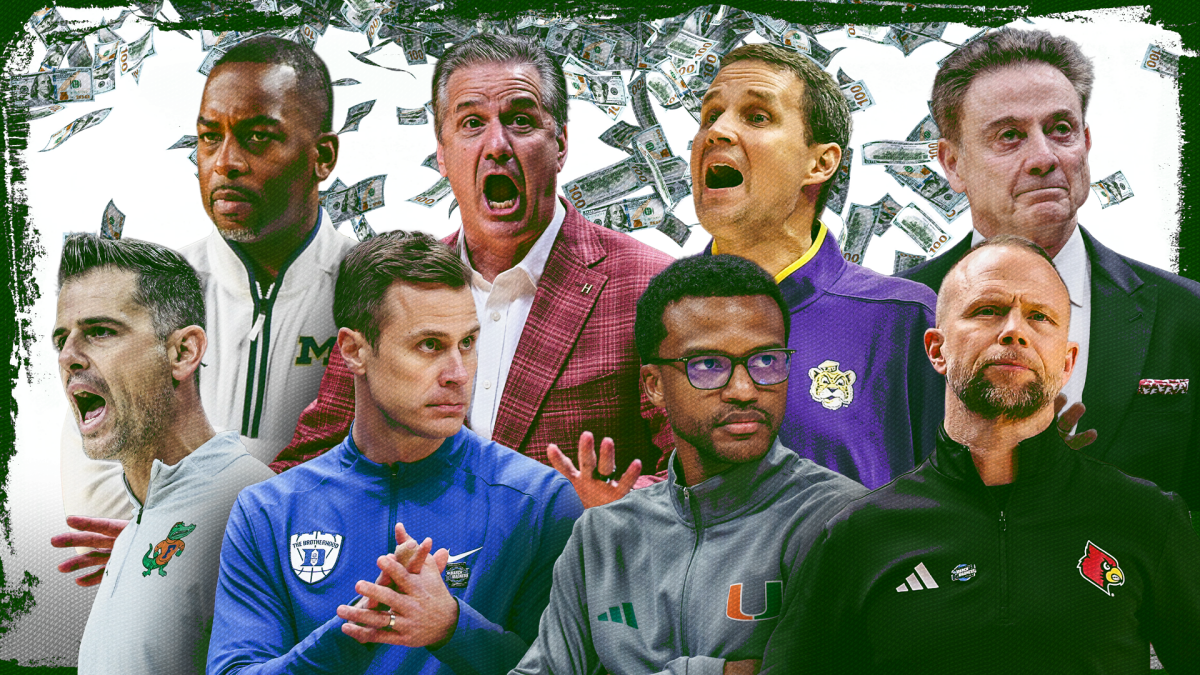
With that being said, CBS Sports published an informative article on October 21 breaking down the projected value of men's college basketball rosters heading into the 2026–27 season. After speaking with more than 100 sources across college athletics, including coaches, athletic directors, agents, and other industry professionals, CBS estimated that the average high-major basketball roster is now worth approximately $13.5 million.
For perspective, that number was closer to $7 million just one year ago.
CBS also identified 11 programs with projected roster valuations of at least $20 million, with some of the highest-spending programs reportedly exceeding $25 million. Are all of those numbers accurate? Well, these are estimates, not publicly audited payrolls. Some may include projected bonuses, incentives, or compensation tied to athletes whose eligibility situations are still being determined.
But that's not necessarily the point. The bigger takeaway is just how much money is now circulating through college basketball and how quickly the market has grown.
So while I still recommend taking any individual number with a grain of salt, these estimates are still useful for understanding the bigger picture.
Beyond The Numbers:
Hopefully this helped clear up some of the confusion surrounding revenue sharing, the House settlement, and how schools are paying athletes. It's a lot to keep up with, and I don't blame anyone for being confused. I spend a good portion of my days dealing with this stuff, and even then, there always seems to be something new popping up.
One thing I always try to emphasize when working with athletes and families is that understanding the money is important, but understanding the entire opportunity is even more important.
Of course, we want to maximize the financial opportunities available to our clients. But that starts with understanding exactly what they're agreeing to. Where is the money coming from? Who's responsible for paying it? When are the payments scheduled? And what happens if something changes?
And then there's an entirely different conversation that goes beyond the contracts. What happens when you're choosing between three different offers? Well, there's a lot more to consider than just the money.
What's your role going to look like?
How do you fit into the coach's system?
What does the roster look like around you?
Most importantly, which opportunity puts you in the best position to reach your long-term goals?
Those answers are going to be different for every athlete. Ultimately, decisions are about much more than simply looking at the biggest number on a piece of paper.
I think that's enough for today. And we didn't even get into how all of this could change if the Protect College Sports Act (PCSA) eventually becomes law...
Stay alive out there. Knowing college sports these days, half of what I just said might change tomorrow. 🤷♂️
As always, this is my interpretation of the information available, mixed with my own experiences and opinions. I'm simply trying to help make sense of an ever-changing landscape. If I missed something, got something wrong, or you have any questions, comments, or a different perspective, feel free to reach out. Always happy to have a conversation!
Kevin Tarca
VP of Basketball Operations

If you're new here, I am the VP of Basketball Operations at FreeGame Management. We sit at the intersection of sports, culture, and commerce, creating opportunities for athletes at every stage.
Our mission is simple: help you win before, during, and after your playing career.
Follow along as we continue to grow an athlete-first organization, by players, for players.



Comments